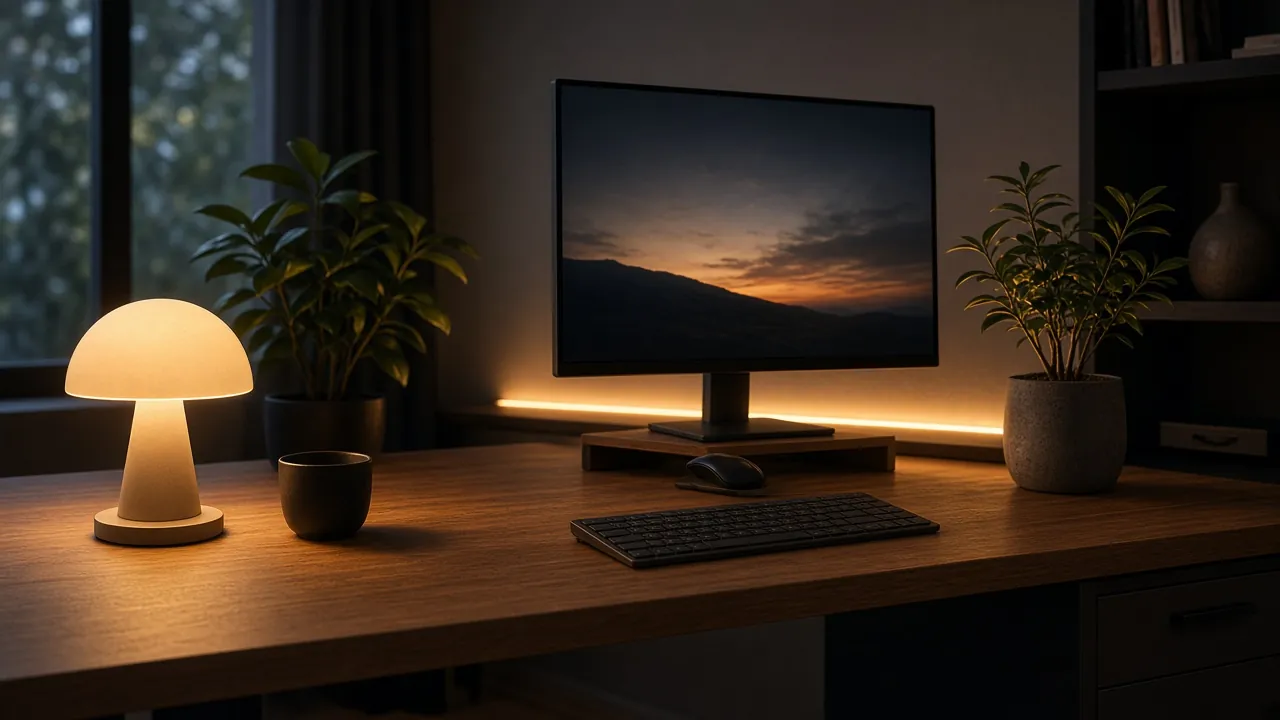
If you're working from home, you know that the right lighting can make a significant difference in your productivity and comfort. However, traditional light fixtures often lack the flexibility to adapt to the varying needs of a home office environment. In this article, we'll explore smart lighting strategies designed to enhance focus and create a more comfortable workspace. By the end, you'll have practical insights into implementing a smart lighting system that can transform your home office experience.
Smart lighting systems offer precise control over light levels, colour temperatures, and even scheduling. This guide will dig into the key components of smart lighting solutions, provide real-life examples, and walk you through a step-by-step setup process to help you achieve an optimal home office environment.
Understanding Smart Lighting Systems
Smart lighting systems revolutionise home office illumination, offering advanced capabilities beyond traditional switches and dimmers. These systems provide remote control and automation, enabling management of office lights through apps, voice assistants, schedules, sensors, or simple switches. Integration with ecosystems like Apple HomeKit, Google Home, Alexa, or SmartThings ensures smooth operation tailored to individual preferences.
Key features include dimming for adjusting brightness, colour changing for different ambiances and focus levels, scheduling options for automated on/off times, and scenes that allow setting up multiple lights with one command. For instance, the CoreLine LED luminaires from Philips, installed in the Munich factory’s offices by Bosch, offer glare-free illumination aiding employee concentration (source: Philips Lighting).
In addition to enhancing productivity and comfort, smart lighting systems contribute to environmental efforts. By integrating energy-efficient LED technology, these systems reduce energy consumption, important for sustainable office settings (source: Philips Lighting). Also, the UV-C disinfection upper air luminaires from Philips provide an extra layer of safety by continuously disinfecting room air, addressing health concerns and promoting a healthier office environment (sources: Philips Lighting and Philips Lighting).
In summary, smart lighting systems offer a full solution for managing lights remotely. They enhance focus, comfort, and safety in the home office with features like dimming, colour changing, scheduling, and scenes, transforming everyday lighting into an essential tool for creating an ideal work environment.
Benefits of Smart Lighting in Your Home Office
Smart lighting in your home office offers numerous benefits that can significantly enhance productivity and comfort. Adjusting light levels allows for better concentration throughout the day. For example, Robert Bosch GmbH installed CoreLine LED luminaires in their Munich factory offices, which improved employee concentration by providing glare-free illumination (Bosch, 2023).
Customizable lighting also reduces eye strain and creates a more inviting working environment, important for long hours at the desk. The CoreLine LED luminaires contributed to high comfort levels in the office space they were installed (Bosch, 2023).
Energy efficiency is another significant advantage of smart lighting systems. These lights are designed to use less energy than traditional bulbs, leading to lower utility bills and a reduced carbon footprint. Philips Lighting emphasizes the energy-saving benefits of their LED luminaires in various office settings, such as Sonepar Connect Reims, France, where UV-C disinfection upper air luminaires were installed for health reasons and their energy-efficient operation (Philips Lighting, 2023).
Smart lighting systems can be automated and controlled via apps or voice assistants, enhancing comfort and productivity. LIFX's guide for new homeowners states that smart lighting systems can be easily integrated into existing ecosystems like Apple Home, Google Home, Alexa, or SmartThings, offering smooth setup and control (LIFX, 2023).
Implementing Smart Lighting: Key Components
To enhance focus and comfort in your home office with a smart lighting system, it is important to choose components designed for smooth integration and efficient control. Begin by selecting smart bulbs or LED luminaires that can be controlled via Wi-Fi without additional hubs or bridges, simplifying management and automation.
For automated adjustments based on room usage and natural light conditions, integrate light sensors or motion detectors. These components ensure your space is well-lit when necessary while conserving energy during unoccupied periods. The OccuSwitch DALI multi-sensors, implemented in the Bosch Munich factory, exemplify how such technology can significantly enhance productivity and comfort (source: Philips Lighting).
Control systems vary, offering options like dedicated apps for scheduling, scene creation, and voice control with compatible assistants like Amazon Alexa or Google Assistant. For a simpler setup, consider switches that can manually toggle lights on or off or adjust settings.
For an all-encompassing solution, explore options such as LIFX's smart lighting system, which provides a straightforward setup and integration with various ecosystems (source: LIFX). With these key components—smart bulbs, sensors or detectors, and a user-friendly control system—you can create an optimal home office environment that adapts to your needs throughout the day.
Smart Lighting Solutions: Examples
The integration of smart lighting in a home office offers enhanced functionality and improved health and safety measures. One notable solution is the CoreLine LED luminaires by Bosch. These luminaires meet stringent standards for light quality and cost-effectiveness, ensuring glare-free illumination that promotes focus and comfort. For instance, the installation of Coreline Recessed LED Luminaires in the Munich factory’s offices at Robert Bosch GmbH brought pleasant light to 240m2 of office space, integrating smoothly with the building architecture. The lighting system is controlled using OccuSwitch DALI multi-sensors, allowing for automated and energy-efficient adjustments (Source: Bosch | Philips Lighting).
In addition to illuminating spaces effectively, Philips offers UV-C disinfection upper air luminaires that can continuously disinfect the air within your home office. This technology provides an extra layer of protection against pathogens, ensuring a safer working environment. The UV-C disinfection upper air luminaires, as seen in the Sonepar Connect agency in Reims, France, and Mašinoprojekt Kopring a.d. In Belgrade, Serbia, use natural convection to circulate disinfected air throughout the room, maintaining an ongoing process of air purification while allowing daily activities to proceed uninterrupted (Sources: UV-C Reims Sonepar | Philips UV-C Upper Air).
For those looking to incorporate smart lighting into their living spaces, LIFX offers a straightforward approach. The LIFX guide suggests starting with commonly used rooms such as the kitchen, bedroom, and entryway, integrating smart lights that work with popular ecosystems like Apple Home, Google Home, Alexa, or SmartThings. This allows for control of lighting through various means, including apps, voice assistants, schedules, switches, sensors, and automation (Source: LIFX).
Cost Considerations
Smart lighting systems vary significantly in price depending on the brand, features, and the number of bulbs or luminaires required for your setup. This makes it an affordable option for those looking to introduce smart lighting into their home office.
When considering costs, it's important to factor in the purchase price of the bulbs and any additional hardware or software that may be necessary.
In some cases, like the example of Bosch's office renovation, cost-effectiveness is emphasized by the purchase price and also by long-term savings on energy and maintenance. The CoreLine LED luminaires chosen by Bosch were designed for low investment costs while providing high-quality light and significant energy savings.
It's also worth considering any additional features that may come with smart lighting systems, such as UV-C disinfection, which can be an added cost but offers the benefit of air purification in addition to standard lighting functions. For instance, Philips UV-C Upper Air luminaires are designed for continuous air disinfection and are priced accordingly.
When budgeting for a smart lighting setup, it's important to consider your specific needs and the scale of the project. A simple solution might require just a few bulbs and a controller, while a more advanced system could involve multiple zones, sensors, and integration with other home automation systems. Always check the official pricing on vendor websites or consult with professionals for the most accurate cost estimates.
Smart Lighting Setup: Step-by-Step
To start a journey toward a smarter, more efficient home office, follow these step-by-step instructions for setting up your smart lighting system:
- Choose the Right Smart Lights: Begin by selecting smart lights that are compatible with your needs and preferred ecosystem. Consider factors such as colour temperature, brightness, and whether you want voice control or app-based control. Products like those from Philips Lighting, which integrates well with room architecture and offers glare-free illumination (as seen in Bosch's office lighting solution), can be ideal choices.
- Installation: Once you have chosen your smart lights, follow the manufacturer's instructions for installation. This may involve screwing in bulbs or mounting luminaires. For instance, Bosch used CoreLine LED luminaires that were installed to provide pleasant light in their Munich factory’s offices, showcasing the importance of a proper installation.
- App Download and Setup: Next, download the appropriate app that controls your smart lights. This will typically allow you to connect them to your home Wi-Fi network. Make sure the app is compatible with your ecosystem; for example, LIFX products can integrate with Apple Home, Google Home, Alexa, or SmartThings. Use this app to configure settings such as schedules, scenes, and voice control integration.
- Configure Settings: In the app, you can set up various lighting scenarios that cater to different moods or activities. For example, you might create a 'focus' scene with brighter light for work hours and a 'relaxation' scene with softer, warmer light for evening use. Additionally, you can integrate your smart lights with voice assistants like Amazon Alexa or Google Assistant for hands-free control.
- Safety Considerations: When setting up your smart lighting system, it is important to consider safety features such as UV-C disinfection, which has been implemented in offices like those at Sonepar Connect Reims and Mašinoprojekt Kopring a.d., providing an added layer of protection against pathogens while ensuring daily activities can continue safely.
Your next steps
Smart Lighting Strategies for Increased Focus and Comfort in Your Home Office
- Review and Adjust Brightness Settings: Use your smart lighting system's capabilities to adjust brightness levels according to the time of day, ensuring optimal lighting for different tasks.
- Incorporate Dimmer Switches: Use dimmer switches to control light intensity more subtly, providing a comfortable environment that can be adjusted for focus or relaxation.
- Consider Colour Temperature Control: Adjust the colour temperature of your smart lights to match the natural lighting outside, promoting alertness during the day and relaxation at night.
- Automate Lighting Cycles: Set up automatic schedules for your smart lights to follow a natural light cycle, helping you maintain productivity and comfort throughout the day.
- Budget Wisely: Research various smart lighting options within your budget range to find the most cost-effective solution that meets your home office needs.
Frequently asked questions
What should you know about Understanding Smart Lighting Systems?
Smart lighting systems revolutionise home office illumination, offering advanced capabilities beyond traditional switches and dimmers. These systems provide remote control and automation, enabling management of office lights through apps, voice assistants, schedules, sensors, or simple switches.
What should you know about Benefits of Smart Lighting in Your Home Office?
Smart lighting in your home office offers numerous benefits that can significantly enhance productivity and comfort. Adjusting light levels allows for better concentration throughout the day.
What should you know about Implementing Smart Lighting: Key Components?
To enhance focus and comfort in your home office with a smart lighting system, it is important to choose components designed for smooth integration and efficient control.
What should you know about Smart Lighting Solutions: Examples?
The integration of smart lighting in a home office offers enhanced functionality and improved health and safety measures. One notable solution is the CoreLine LED luminaires by Bosch.
Sources
- www.lighting.philips.com/support/cases/office/bosch
- www.lighting.philips.com/support/cases/office/uv-c-reims-sonepar
- www.lighting.philips.com/support/cases/office/uv-c-upper-air-masinoprojekt
- www.lifx.com/pages/new-homeowners-guide-to-smart-lighting-where-to-start
Facts, prices and links checked on 19 October 2026. Prices and features change, so confirm on the official pages before you decide.